01 · A
Problem
Long paired recordings cannot be treated like ordinary desktop charts. Engineers still need to locate suspicious intervals precisely, assign a signal type and return to unfinished reviews without losing work.
Expert review at industrial scale
A desktop workbench for navigating, annotating and resuming work on very long measurement records while keeping model suggestions separate from expert-approved labels.
TL;DR

01 · A
Long paired recordings cannot be treated like ordinary desktop charts. Engineers still need to locate suspicious intervals precisely, assign a signal type and return to unfinished reviews without losing work.
01 · B
At an anonymized industrial measurement technology company, I iterated the interaction model and positioning rules with future users and domain engineers. To protect confidential work, I focus this case study on the workflow rather than customer data or identifiable device details.
I use this workflow illustration to show the interaction model: machine candidates remain amber, expert-confirmed intervals become teal, and every edit stays tied to an original signal position.
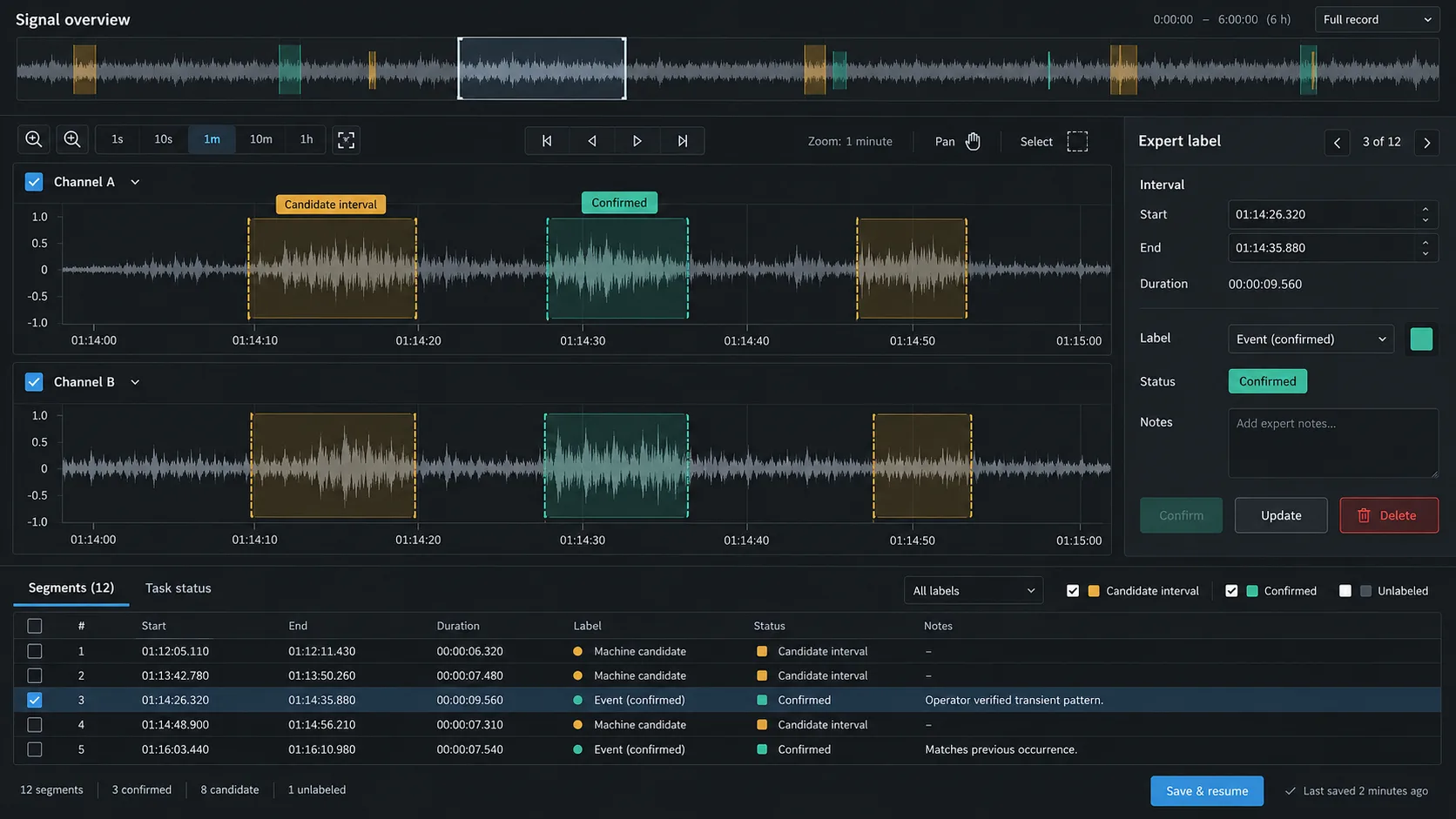
Partial discharge is not one uniform waveform: internal, surface and corona activity can appear alongside switching and environmental noise. Reliable interval and type labels are the foundation for separating these mechanisms and for studying insulation degradation before it develops into a more serious fault.
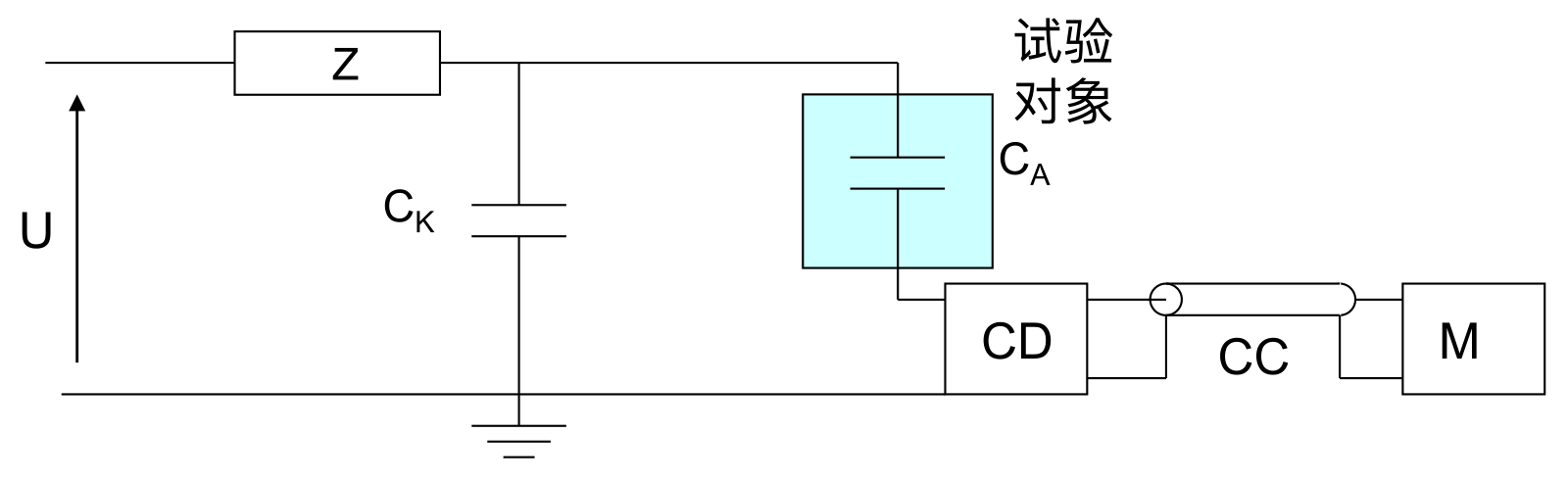
Memory and rendering cost grow faster than a desktop interface can tolerate.
Screen coordinates, downsampled views and source indices must remain reversibly aligned.
Keyboard and mouse workflows must support fast review without hiding state changes.
Automatic preselection may prioritize intervals, but it cannot replace expert approval.
Coordinate contract
Long recordings are rendered through windows and reduced views. Every screen selection must still map reversibly to the source sample range.
Immutable sample positions
Read only the active region
Downsample for responsive drawing
Store original start and end
Correctness is defined in source coordinates, not pixels.
System path
Read only the required record windows and preserve source positions
Shift + wheel pans, Ctrl + wheel zooms, and overview/detail views stay synchronized
Select, cancel, delete and type intervals while review state remains explicit
Persist progress, export labels and retain model suggestions separately
Human review loop
Preselection reduces where experts look. It does not collapse proposal, correction and approved truth into one state.
Suggested interval and score
Zoom, pan and compare channels
Move, resize, cancel or delete
Type and boundaries approved
Save progress and export provenance
Key trade-offs
The interface can downsample what it draws while annotations continue to reference the original signal positions.
Signal-processing and model output is shown as a candidate layer until an engineer accepts or changes it.
Resume and export behavior were treated as core domain behavior rather than a final save button.
04 · A
04 · B
01For long signals, interaction latency and coordinate correctness are one product problem.
02Human-in-the-loop systems need provenance for both machine suggestions and final labels.
What I can share
Because this work used confidential industrial recordings, I cannot publish customer data or internal performance benchmarks. I can show the workflow I implemented: modular signal processing, resumable annotation and export of original sample positions.
Public sources
https://commons.wikimedia.org/wiki/File:Portable_TEV_Detector_in_use.jpgPartial-discharge measurement diagram · CC BY-SA 3.0 https://commons.wikimedia.org/wiki/File:Partial_discharge_1a_svg.svgOMICRON guide to partial-discharge measurements https://www.omicronenergy.com/uploads/tx_downloader/51c20/A_Guide_for_PD_Measurements_on_MV_and_HV_apparatus_-_Part1.pdf